How to Break Bad Habits: A Step-by-Step Framework That Works
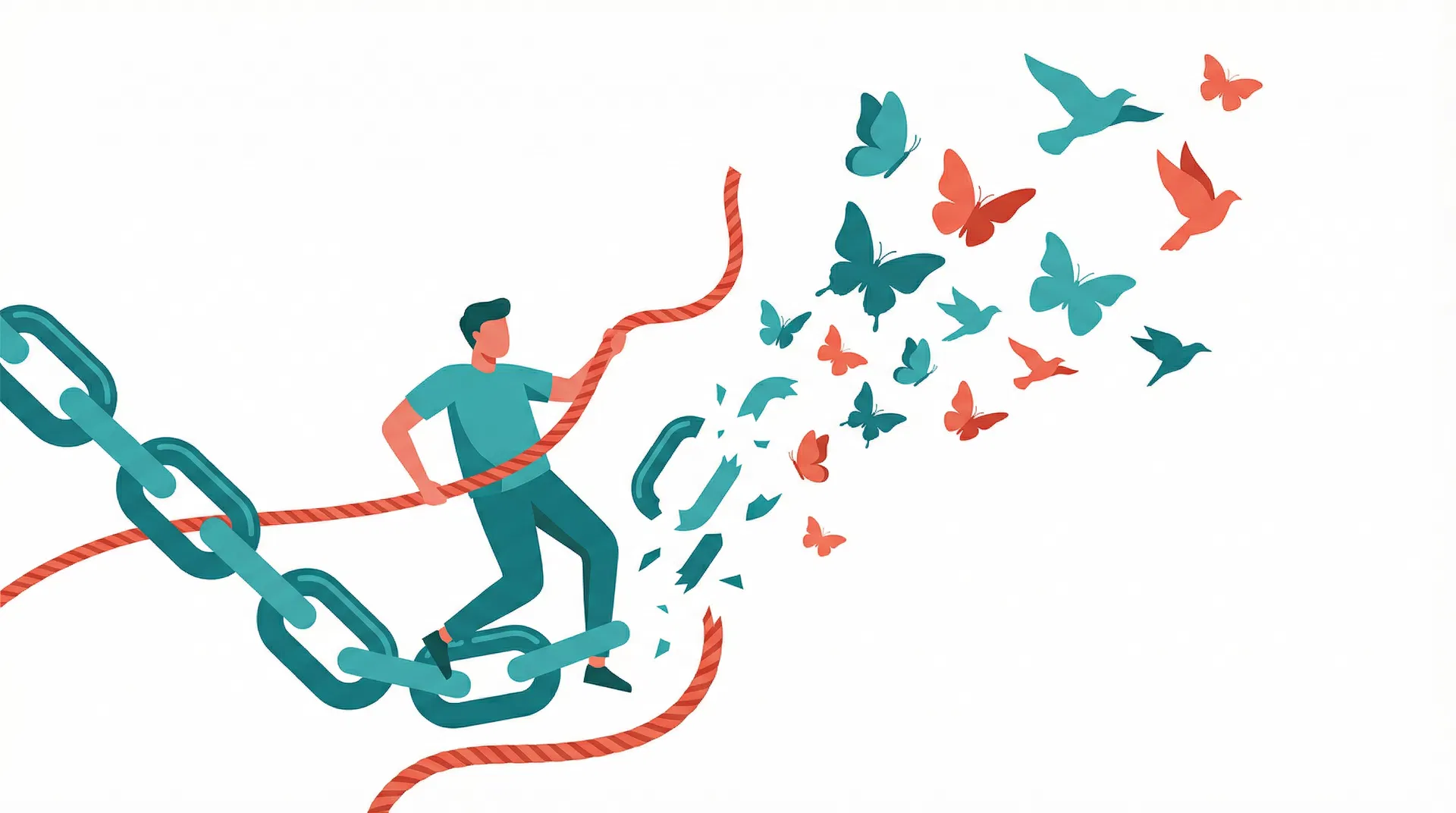
Why Bad Habits Are So Hard to Break
Bad habits are not a sign of weakness or poor character. They are deeply ingrained neurological patterns that your brain has optimized for efficiency. Every time you bite your nails, scroll social media mindlessly, or reach for junk food, your brain is following a well-worn path that was reinforced through thousands of repetitions. Understanding how to break bad habits step by step begins with recognizing that these behaviors serve a purpose — they satisfy a craving, even if the long-term consequences are negative. Smoking relieves stress. Procrastination avoids discomfort. Overeating provides comfort. The habit loop of cue, craving, response, and reward operates identically for both good and bad habits. The difference is that breaking a bad habit requires you to work against a pattern your brain has already automated, which is why willpower alone almost never works as a long-term strategy.
The Inversion Principle: Reversing Ohitura's four behavioral principles
If Ohitura's four behavioral principles tell you how to build good habits — make it obvious, attractive, easy, and satisfying — then breaking bad habits requires the exact opposite approach. Make the cue invisible by removing triggers from your environment. Make the behavior unattractive by reframing how you think about it. Make it difficult by adding friction between you and the bad habit. And make it unsatisfying by creating immediate consequences for the behavior. This inversion framework provides a systematic approach to breaking bad habits step by step rather than relying on vague intentions to 'just stop.' Each law gives you a specific lever to pull, and the more levers you engage simultaneously, the more likely you are to succeed. The key insight is that you do not need to fight the habit directly — you need to change the system that supports it.
Step 1: Make It Invisible — Remove the Cues
The most powerful way to eliminate a bad habit is to remove the cues that trigger it. If you eat too many snacks, do not keep them in the house. If you check your phone too often, leave it in another room. If you watch too much television, unplug the TV after each use and put the remote in a drawer. Research consistently shows that people with the best self-control are not actually better at resisting temptation — they are better at structuring their environment so that temptation rarely arises. A study at the University of Cambridge found that changing environmental defaults was more effective than education or motivation in changing behavior. You cannot rely on willpower to resist a cue that your brain has been trained to respond to automatically. Instead, redesign your surroundings so the cue simply does not appear. This is the single most impactful step you can take.
Step 2: Make It Unattractive — Reframe the Behavior
Every bad habit has an underlying craving that makes it attractive. To break the habit, you need to change how you think about it. Instead of telling yourself 'I cannot have a cigarette,' reframe it as 'I do not smoke because I am someone who values my health.' Instead of 'I have to resist checking social media,' think 'I choose to be present because I value real connections.' This cognitive reframing technique shifts the behavior from something you are deprived of to something you are liberated from. Highlight the benefits of not performing the bad habit rather than dwelling on what you are giving up. Write down every negative consequence of the habit — the money wasted, the time lost, the health impact, the way it makes you feel afterward. Make these costs vivid and personal. When the true price of a bad habit becomes clear, the craving loses much of its power over your decisions.
Step 3: Make It Difficult — Add Friction
Just as reducing friction helps you build good habits, adding friction helps you stop bad habits permanently. The goal is to increase the number of steps between you and the unwanted behavior. If you want to spend less time on social media, delete the apps from your phone and only access them through a browser. If you want to stop impulse buying, remove saved credit card information from shopping sites. If you want to eat less junk food, do not drive past the fast food restaurant on your way home. Each additional step creates a moment of pause where your conscious mind can override the automatic impulse. Commitment devices are particularly effective — these are choices you make in the present that lock in better behavior in the future. Ohitura's friction tips feature suggests specific ways to add barriers to your bad habits, giving you practical strategies tailored to each behavior you want to change.
Step 4: Make It Unsatisfying — Create Accountability
Bad habits persist because they are immediately rewarding even when they are long-term destructive. To counteract this, you need to make the consequences of the bad habit immediate rather than delayed. An accountability partner is one of the most effective tools here — knowing that someone else is watching creates an immediate social cost for slipping up. Habit contracts, where you commit to a specific penalty for performing the bad habit, add another layer of consequence. Even simple tracking creates accountability. When you log every instance of a bad habit, you cannot hide from the data. Seeing that you checked social media 47 times yesterday or ate fast food four times this week makes the behavior impossible to rationalize. The visual record transforms an abstract problem into a concrete one. Ohitura's bad habit tracking lets you monitor these behaviors alongside your good habits, giving you a complete picture of your daily patterns.
The Substitution Strategy: Replace Bad Habits With Good Ones
One of the most effective approaches to breaking bad habits is not to eliminate them but to replace them. Since every bad habit fulfills a craving, you need to find a healthier behavior that satisfies the same underlying need. If you smoke to relieve stress, replace it with deep breathing exercises or a short walk. If you eat junk food for comfort, replace it with a healthier comfort food or a brief meditation. If you procrastinate to avoid anxiety, replace it with a two-minute version of the task that feels manageable. The substitution strategy works because it does not leave a void. Simply trying to stop a behavior creates a vacuum that your brain will desperately try to fill, often by reverting to the original habit. By proactively choosing a replacement, you redirect the habit loop rather than trying to break it entirely. Over time, the new behavior becomes the automatic response to the original cue.
Tracking Your Progress: Why Data Beats Willpower
When it comes to breaking bad habits, what gets measured gets managed. Tracking creates awareness, and awareness is the first step toward change. Many bad habits operate below the level of conscious awareness — you might not realize how often you check your phone, bite your nails, or reach for a snack until you start counting. A habit journal or tracking app brings these unconscious patterns into the light. Beyond awareness, tracking provides motivation through visible progress. Watching the number of days since your last slip increase creates a streak that you become reluctant to break. Seeing your weekly instances of a bad habit decrease from seven to three to one provides tangible evidence that your efforts are working. This data-driven approach to replace bad habits with good ones removes the guesswork and emotional reasoning that often sabotage change efforts.
Common Mistakes When Trying to Break Bad Habits
Several common mistakes derail people who are trying to break bad habits. The first is trying to change too many habits at once. Focus on one bad habit at a time and give it your full attention for at least 30 days before adding another. The second mistake is relying solely on willpower. Willpower is a finite resource that depletes throughout the day, which is why most relapses happen in the evening when your self-control reserves are lowest. The third mistake is not having a plan for when cravings strike. Decide in advance what you will do when the urge hits — this is called an implementation intention, and it dramatically improves your response in the moment. The fourth mistake is treating a single slip as total failure. One cigarette does not make you a smoker again. One missed workout does not erase your progress. What matters is your response to the slip, not the slip itself.
Your Framework for Lasting Change
Breaking bad habits is a process, not an event. It requires patience, self-compassion, and a systematic approach. Start by identifying the cue that triggers your bad habit — when does it happen, where are you, who are you with, what emotion are you feeling? Then apply the inversion framework: remove the cue from your environment, reframe the behavior as unattractive, add friction to make it difficult, and create accountability to make it unsatisfying. Choose a replacement behavior that satisfies the same underlying craving. Track your progress daily so you can see the evidence of change accumulating. And when you slip — because you will — apply the never-miss-twice rule and get back on track immediately. If you want a tool that supports this entire framework, Ohitura was designed with behavior change science at its core. From bad habit tracking with friction tips to AI coaching that helps you identify patterns and substitution strategies, it provides the structure that makes lasting change achievable.
Related Reading
Compare Habit Trackers
Use Cases & Guides
Start building your habits today
Join thousands of people using science-backed methods to transform their daily routines. Free forever, no credit card required.